The Campaign for Seed-Sovereignty is an initiative of the European Civic Forum and the German „BUKO-Campaign against biopiracy“ and is connecting seed activists and farmers in Germany, Austria, France and Suisse. It is working together with like-minded organizations and individuals in these and other European countries.
Campaign for Seed-Sovereignty
Seeds must remain part of the Commons!
The Commissions proposal for a seed regulation is politically dead
We've
made it! The Parliament of the EU has decided in the plenary
session of 11 March 2014. They adopted with 511 to 130 votes a
legislative resolution, which rejects the proposal of 6 Mai 2013
very clear and calls the Commission to submit a new one.
Until
the last moment it was unclear: would the Parliament adopt such a
legally binding resolution or would it restrict itself to a simple
appeal to the Commission to withdraw the proposal? This appeal in
the so called rejection report got 650 to 15 votes. But the
Parliament insisted in a voting on the legislative resolution with
the above mentioned result.
By this the longstanding
engagement of organisations and groups which are dedicated to the
maintaining and broadening of diversity, which are working for
farmers rights to produce, exchange and use their seed or which
are breeding varieties for ecofarming was successful.
With
this decision the Parliament gave ear to the many hundreds of
thousands of people from many European countries which signed
since April 2013 diverse petitions against the Commissions
proposal. Alone our petition „seed diversity under threat“
got some 150.000 supporters in 12 different languages.
A
big „THANK YOU“ to all of you!
Now we have to
wait and be aware of how the Commission and the Council react on
the resolution of the Parliament – and we will be attentive
to intervene if necessary. For this the support of you all will be
needed furthermore!
Brighton
Corn Exchange
1
February
2015,
10 a.m. - 4 p.m.
Web
– Twitter
Recaim the Seeds Meeting (NL)
by A Seed NL et. al.
Peliti
International Seed Festival (HE)
25
April
2014
Legislative procedure in Parliament at the Crossroads
On
Tuesday is the big seed day in the EU-Parliament. It The EP will
vote on it in plenary. What will happen?
Scenario A: The
Parliament adopts a “non-legislative
rejection”.
This is just a postponement - just
a show.
In this scenario, the new parliament will continue the work after
elections in May.
Scenario B: The Parliament
adopts a LEGISLATIVE rejection.
This would mean the political death of the seed regulation. On
Monday evening, the major political groups will discuss the issue
on and fix their position. A so called 1st reading.
The
draft for such an LEGISLATIVE RESOLUTION is already tabled!
You
find it here: http://tinyurl.com/legislative-resulution-seedlaw
or:
http://www.europarl.europa.eu/sides/getDoc.do?pubRef=-//EP//TEXT+REPORT+A7-2014-0112+0+DOC+XML+V0//EN
Text:
"The
European Parliament, ... 1. Rejects the Commission proposal;
2.
Calls on the Commission to withdraw its proposal and submit a new
one;
3. Instructs its President to forward its position to the
Council, the Commission and the national parliaments."
 MEPs
criticize proposed new EU seed law
MEPs
criticize proposed new EU seed law
The Campaign for Seed Sovereignty recognizes the criticism of the proposed EU seed regulation following the statements by some MEPs in the AGRI committee of the EU-Parliament.
In
their meeting
on Monday, the 30th of September
Martin
HÄUSLING (Greens/EFA; Germany), Ulrike RODUST (S&D;
Germany), Britta REIMERS (ALDE; Germany) and Karin KADENBACH (S&D;
Austria) took the floor and criticized the strengthening of the
concentration in the seed market and the large number of delegated
acts. They asked for the deregulation of small producers, and for
the transparency of breeding methods.
John Stuart AGNEW (EFD;
UK) stressed the need for the exclusion of private persons from
the scope of the regulation. Marc TARABELLA (S&D; Belgium)
asked for free of seed exchange between farmers. Georg LYON (ALDE;
UK) asked if the new regulation would really be a simplification.
Read
more.
Summary of the meeting of the AGRI-Committee of the EU-Parliament of 30 September on the seed legislation here in EN, NL, FR, PT, SL, CS, RO, DK and DE.
27.
Nov 2013, Vienna:
DECLARATION
IN THE SPIRIT OF TRUTH, LIFE AND JUSTICE:
„Protect
our natural heritage, biodiversity and resulting food security!“
– an urgent call to action
„We,
as representatives of farmers‘ organisations, gardeners,
smallholders, plant conservation, plant breeders and members of
the European civil society, meeting in Vienna, Austria, 24
November 2013, are deeply concerned about the European Union’s
proposed REGULATION on Plant Reproductive Materials ... We have
serious concerns with respect to food sovereignty, preserving
biodiversity, food security, and the health and freedom of
European citizens.
We strongly demand:
1. People, whether
they be farmers or gardeners must not be obliged to buy seeds or
other “plant reproductive material” from commercial
providers. Any regulation must guarantee the rights of farmers,
gardeners and all collectives to use, exchange and sell their own
seeds and plants, to respect all Human Rights Declarations and the
International Plant Treaty (ITPGR-FA).
2. The industry standard
should not be the adopted standard for the seed and plant market.
It implies a technical and legal definition that natural plants
cannot comply with and it does not recognise the significance of
biodiversity.
3. Freely reproducible plants should not be
subject to compulsory registration for varieties or certification
of seeds and plants. Biodiversity should take precedence over
commercial interest, as it is a public good, just like water.
4.
For all proposals which impact upon biodiversity consultations
should take place with the public, and the decisions should be
made by elected representatives. The protection of biodiversity is
not a “technical detail” in the meaning of the Treaty
on the functioning of the EU.
5. Labeling requirements should
be truly transparent and reflect the technological developments,
including new microbiological breeding methods, and any technical
and legal restrictions of use.
6. Official controls governing
seeds and plants shall remain a public service and shall be
provided free of charge for small operators
(micro-enterprises).
Read
complete declaration
„ESA
is afraid of free competition with farmers' varieties”
JOINT STATEMENT ON THE PROPOSAL ON LEGISLATION ABOUT PLANT REPRODUCTIVE MATERIAL (June 2013)
signed byAegilops (GR), Agrolink (BG), Arche Noah (A), A Seed Europe, Bifurcated Carrots (NL), Bio Austria, Campaign for Seed Sovereignty, Danish Seed Savers, Dachverband Kulturpflanzen- und Nutztiervielfalt (D), Eco Ruralis (ROM), Forum Civique Européen (F-D-A-CH), Föreningen Sesam (S), GAIA (P), Garden Organic (UK), Global 2000 (A), ZMAG (HR), Irish Seed Savers, Latvijas Zemes draugi (Friends of the Earth Latvia), MPI (P), ÖBV – Via Campesina Austria, Peliti (GR), Praktisk Økologi (DK), Quercus (P), Varuhi semen (SL)
On the occasion of the conference the EU Commission held on 13th of June with the EU Parliament and EU Council to explain the package “smarter rules for safer food“ on seed marketing, plant pests, animal health and related official controls.
Whilst in the preamble, the proposal for the plant reproductive material law looks as if every effort is being made to preserve and promote agricultural biodiversity and on-farm conservation, the reality is that the opposite is happening. New rules and restrictions have been created which hamper the freedom of farmers and seed saving organisations. In addition, the “niche” (art. 36) is not going to work in a practical sense, because of the restrictions assigned to “niche” sector and the perspective of them being further tightened by means of “Delegated Acts” by the EU Commission at any stage.
Petition:
Seed
diversity under threat
–
Against
European seed regulations for the benefit of the seed industry
Esteemed
Members of the Commission,
Esteemed Members of the
Parliament,
Esteemed Members of the Council!
New seed
regulations are currently being drafted in Brussels. If the
Directorate General for Health and Consumers’ plans become a
reality, more old and rare varieties of fruits, vegetables and
grains will disappear from the market. These diverse varieties and
varieties adapted to organic agriculture are to be hampered by
bureaucracy, while the power of corporate agriculture is further
strengthened.
The currently available texts for the new EU seed
regulation will promote a concentration of the seed market into
the hands of a small number of seed industry corporations. This is
unacceptable. A new EU seed regulation must allow diversity
varieties, varieties for small-scale farming and ecologically
adapted breeding.
Diverse varieties must be available not only
in gene banks, but on the open market too, without any
bureaucratic restrictions. Therefore we demand: no obligation for
registration! Besides this, the current registration criteria must
be lowered for varieties suitable for organic farming by virtue of
their diversity, so our agriculture remains adaptable to climate
change, new pests and diseases, as well as more environmentally
friendly lifestyles.
Neither the current EU seed law nor the
presently available informally submitted drafts for legal changes
to the law fulfil these requirements. They threaten seed diversity
and thereby mankind’s common agricultural heritage. They
also threaten sustainable food systems and exist only to serve the
agrochemical industry.
We urge you, EU Commission, Parliament
and Council members, to reject any proposal that does not fulfil
the above mentioned criteria!
No
more destruction of agricultural and horticultural seed diversity
in Europe!
Sign
up the petition!
Petition in different languages:
DE
(German)
EN
(English)
FR
(French)
DK
(Danish)
SL
(Slovenian)
CZ
(Czech)
SK
(Slovakian)
HR
(Croatian)
PT
(Portuguese)
IT
(Italian)
PL
(Polish)
NL
(Dutch)
HU
(Hungarian)
RO
(Romanian)
SV
(Svedish)
LV
(Latvian)
(use
Character-Set UTF-8)
BG
(Bulgarian)
(use
Character-Set ISO-8859-5)
EL
(Greek)
(use
Character-Set ISO-8859-7)
 Press
release of “Arche Noah”
on
the proposal of the EU commission
Press
release of “Arche Noah”
on
the proposal of the EU commission
Proposal
of the EU commission
for
a regulation on seeds and other plant propagating material
The Latest in the Battle to Reform EU Seed Laws (2013-02-24)
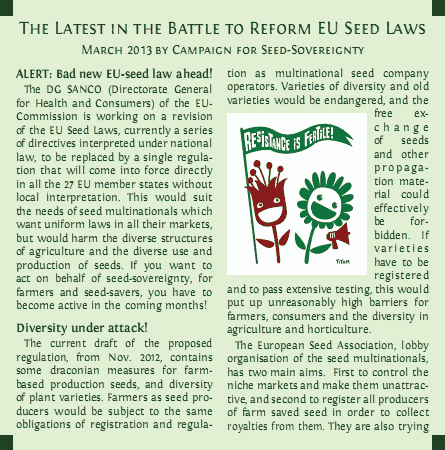 ALERT:
Bad new EU-seed law ahead!
ALERT:
Bad new EU-seed law ahead!
The
DG SANCO (Directorate General for Health and Consumers) of the
EU-Commission is working on a revision of the EU Seed Laws,
currently a series of directives interpreted under national law,
to be replaced by a single regulation that will come into force
directly in all the 27 EU member states without local
interpretation. This would suit the needs of seed multinationals
which want uniform laws in all their markets, but would harm the
diverse structures of agriculture and the diverse use and
production of seeds. If you want to act on behalf of
seed-sovereignty, for farmers and seed-savers, you have to become
active in the coming months!
Diversity
under attack!
The
current draft of the proposed regulation, from Nov. 2012,
contains some draconian measures for farm-based production seeds,
and diversity of plant varieties. Farmers as seed producers would
be subject to the same obligations of registration and regulation
as multinational seed company operators. Varieties of
diversity and old varieties would be endangered, and the
free exchange of seeds and other propagation material could
effectively be forbidden. If varieties have to be registered and
to pass extensive testing, this would put up unreasonably high
barriers for farmers, consumers and the diversity in agriculture
and horticulture.
The European Seed Association, lobby
organisation of the seed multinationals, has two main aims. First
to control the niche markets and make them unattractive, and
second to register all producers of farm saved seed in order to
collect royalties from them. They are also trying to combine the
testing and evaluation for plant variety protection (PVP) and the
licensing for marketing, and to privatize the entire process. This
would hit the small companies and farmers, who would face
increasing and unreasonable testing and evaluation costs, for each
single variety of seed they wish to use.
What‘s
next?
The
current draft regulation was written by DG SANCO. Before it
becomes an official proposal of the EU-Commission, DG AGRI
(Directorate General of Agriculture and Rural Development) and the
DG ENVI (Directorate General for the Environment) have to agree to
it‘s contents. At the moment there are several points of
disagreement.
This opens a window we should use to struggle for
more diversity, for open pollinated varieties (versus ”hybrid”
varieties), and for more diverse seeds in the hands of farmers,
gardeners and seed savers.
Our demands for a new EU seed law:
•No regulation of seed exchange by seed savers and farmers!
•No mandatory registration or certification for open pollinated varieties!
“From
seed to seed” -
An educational film on the production of seeds
 The
film is intended for all those interested in seed production -
beginners, amateur gardeners, farmers, vocational colleges,
children, those who wish to contribute to the conservation of
plant diversity, those for whom it is urgent to grow their own
seeds in order to adapt to different climate conditions or for
food security
The
film is intended for all those interested in seed production -
beginners, amateur gardeners, farmers, vocational colleges,
children, those who wish to contribute to the conservation of
plant diversity, those for whom it is urgent to grow their own
seeds in order to adapt to different climate conditions or for
food security
read
more...
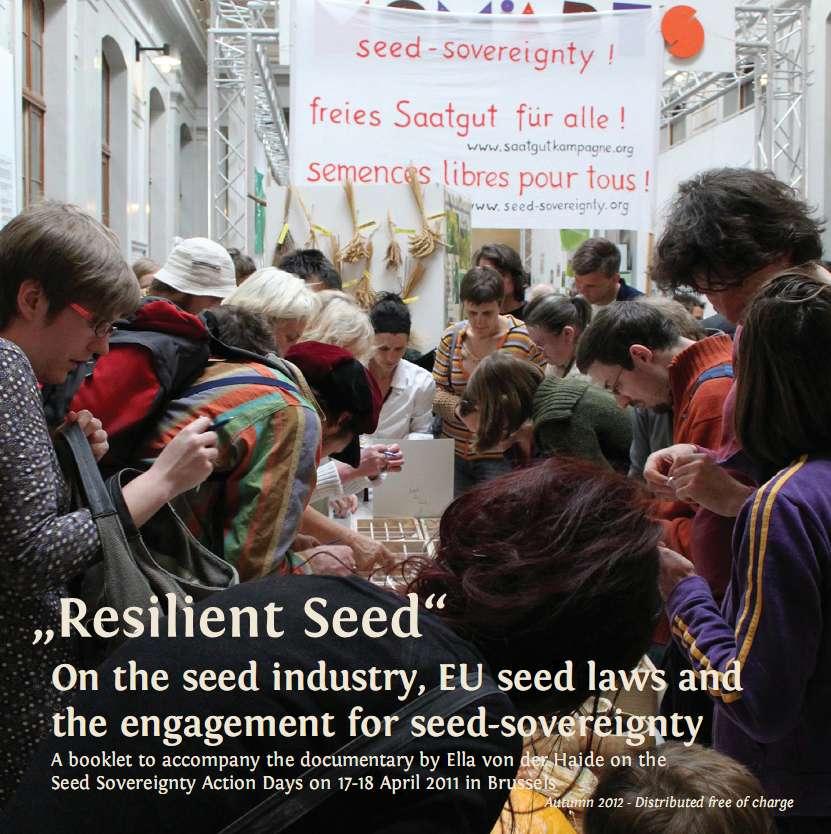 Resilient
Seed
Resilient
Seed
On the seed industry,
EU seed laws and the engagement for seed-sovereignty
„Resilient
Seed“ - the booklet
chap.
1.: Get informed and take action!
chap. 2.: The power of seed
and agrochemical companies
chap. 3.: Seed marketing law
chap.
4.; Seed law in 2012 at a crossroads
chap. 5.: Plant variety
protection (PVP) and UPOV
chap. 6.: Patents on plants
chap.
7.: How to organise a seed swap
Commission of the EU released drafts for new seed law
In
the first weeks of November the Commission of the EU has released
drafts for new
regulations
of the seed sector:
- „Draft
on plant reproductive materials”
-
„Draft
paper on plant health”
-
„Draft
paper on a proposal on official controls”
Resilient
Seed
On the seed industry,
EU seed laws and the engagement for seed-sovereignty
„Resilient
Seed“ - the booklet
chap.
1.: Get informed and take action!
chap. 2.: The power of seed
and agrochemical companies
chap. 3.: Seed law = seed marketing
law
chap. 4.; Seed law in 2012 at a crossroads
chap. 5.:
Plant variety protection (PVP) and UPOV
chap. 6.: Patents on
plants
chap. 7.: How to organise a seed swap
Call
to Action for Seed Sovereignty on 16 October 2012:
We
need seed sovereignty
to be able to
achieve food sovereignty!
Our demands are:
open access to fertile and diverse seeds free of any form of legal protection or patenting;
the right for farmers and gardeners to obtain seeds from their harvest, to re-sow, distribute and sell them;
a new model of agriculture based on local, small-scale food webs rather than monocultures requiring high inputs;
new agricultural and trade policies promoting production for local needs and not global “free” trade, dominated by transnational corporations;
policies that favour the needs of farmers and consumers, health and the environment instead of profits for big business.
The
European Court of Justice's decision reconfirms the interdiction
of seed trade:
Diversity of Cultivated Varieties
still endangered
The European Court of Justice stated the validity of current EU legislation on seed commerce by its judgement on 12th of July. Thereby it rejected the fundamental critics uttered beforehand by Advocate General Kokott. Accordingly, the existing trade embargo for seeds from non-registered varieties remains untouched. This is a defeat for the agricultural biodiversity and the ones who dedicate themselves to self-determined agriculture and gardening.
Andreas Riekeberg from the campaign for seed-sovereignty says: „It is an annoying judgement far from the reality. The court solely has reconfirmed the current EU legislation without taking into account the detailed critic by Advocate General Kokott, which pointed out the ongoing destruction of biodiversity on the fields and in the gardens driven by the respective directives. This is a slap in the face of those concerned with agricultural diversity. The judgement keeps going on promoting the seed industry and their uniform varieties which only grow with the help of chemical inputs, be it pesticides or fertilizers.“
Jürgen Holzapfel lives on the farm Ulenkrug in Mecklenburg-Vorpommern, Germany. He is a cultivator of old cereal varieties and saves his own seeds. He says: „I would have to tell the authorities about all the varieties of seeds which I save, even if I use them just for myself. To commercialize them, I would need to register them as conservation varieties, pay the fees and bear in mind not to exceed a certain quantity. I would even have to arrange with other farmers not to exceed the maximum threshold for a specific variety in a specific region. The court claims in the official press release to ensure the protection of plant genetic resources by this provision. This is just not true.“
The objectives of the campaign for seed-sovereignty are described by Anne Schweigler: „We will continue to struggle for the common right of all farmers and gardeners to decide for themselves which variety to cultivate. We will keep on organizing seed swaps and enhancing regional and international networks. The production of food and our alimentation have to be self-determined and must not be controlled by the agro-industry.“
The campaign for seed-sovereignty criticizes the policy of conserving the biodiversity stretched into a dwarfish frame by the EU directive. This in turn shall impede the emergence of a market of regional farm-saved seeds, e. g. for vegetables, cereals and seed oil as an alternative to the industrial market. Today, the European Court of Justice follows the legislative in its attempt to; „ … preventing the emergence of a parallel market for such seed, which was likely to constitute an impediment to the internal market for seed of vegetable varieties “. As written in the court's press release. It could have interfered with the business of the market-dominating corporations.
The campaign for seed-sovereignty is in line with the majority of seed saving initiatives in Europe, saying that the conservation directive is an impediment to the sustainment of biodiversity, which is luckily hardly applicable in reality. However, seed savers can be subject to prosecution when their work is disturbing the corporations.
The legal dispute between the seed saving initiative Kokopelli and the corporation Graines Beaumaux challenged the validity of current EU law and was brought to the European Court of Justice. The opinion of Advocate General Kokott on January 1st 2012 gave rise to hope that the restrictive EU directives could be dismissed.
Principally, only registered seeds may be traded within the EU. What was once meant to guarantee their quality, has evolved into a strong limitation of the diversity of seeds. Many old varieties have disappeared from the gardens and the shelves in the stores, either because they do not meet the catalogues constraints or their registration cannot be afforded by small farmers or initiatives.
Within the last 30 years a tremendous concentration on the seed market has been observed. A few transnational corporations comprise 65% to 80% of the share, depending on the crop and the region of the world. This was crucial to the accelerated destruction of biodiversity. Not until recent years (2008 - 2010), has the EU adopted three directives on conservation varieties. However, the activity of seed saving farmers and gardeners is limited due to the admission procedure and the restrictions of produced quantity.
Opinion
of the Advocate General (19.01.2012):
http://curia.europa.eu/juris/document/document.jsf?text=&docid=118143&pageIndex=0&doclang=EN&mode=req&dir=&occ=first&part=1&cid=66802
Press release of the European Court of Justice (12.07.2012): http://curia.europa.eu/jcms/jcms/P_89305/
Decision C-59/11 of the EJC: http://curia.europa.eu/juris/document/document.jsf?text=&docid=125002&pageIndex=0&doclang=EN&mode=lst&dir=&occ=first&part=1&cid=43979
(Translation of the press release of the Campaign for Seed Sovereignty from 12.07.2012)
Kampagne für Saatgut-Souveränität (auf Deutsch, 12/072012)
Kokopelli (en Française, 12/07/2012)
New EU Seed Law: “all power to the multinationals”
By
Erik D'haese
March 24th, 2012 (MO * magazine, Belgium
06-12-2011) -The European Union is working on a new legislation
for seeds. Earlier this year a Stakeholder Consultation was
organised. There are, however, quite a few comments to make about
the way this consultation happened. There is also the question of
whether the law which emerges will present a sensible answer to
the problems agriculture and the food system are currently facing.
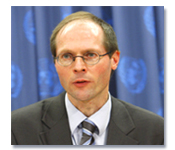
UN Special Rapporteur on the Right to Food, Olivier De Schutter
doesn't seem convinced that it will.
Full
text
Days of action in Portugal - report:
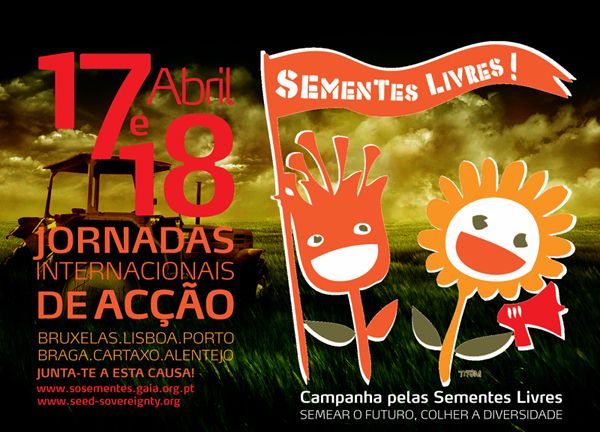 17./18.
April:Day of action in Poland – more than 100 events for the
preserving of seeds:
17./18.
April:Day of action in Poland – more than 100 events for the
preserving of seeds:
Seed Sovereignty is the basis for Food Sovereignty!
On October, 16th, there will be the World Food Day. The Forum for Food Sovereignty Nyeleni- Europe”, which met in August in Krems/Austria in August, calls for decentral actions during the week prior to October, 16th.
We, the Seed Campaign, understand ourselves as a part of the actions and the movements for food sovereignty.
We demand:
the right to obtain seeds from our own harvest, to re-sow, distribute and sell them;
the promotion of diversity in all regions by supporting conservers and breeders of varieties that can be re-sown;
the prohibition of genetic modofication technologies in agriculture;
the prohibition, without exceptions, of patents on plants and animals, their traits and genes, as well as patents on breeding methods;
a new agrarian policy, which, instead of supporting energy-intensive industrial production and monocultures, promotes biodiverse and ecological production.
Because of the October, 16th, we publish a message from Oliver de Schutter, the United Nations' Special Rapporteur on the right to food, in solidarity with these worldwide struggles for food souvereignty. He sent this video-message to the Seed Campaign (and the European Civic Forum, as one of the initiators of the campaign) on the occasion of the Seed Action Days in April in Brussels.
Oliver de Schutter covers the issue of seed policies on the relationship between access to seeds and the Right to Food. He focuses on the developing countries and the consequences for peasants of the European and global seed legislations.
Read the text of the video message in English
Watch the video message online (French with English subtitles)
Download the video (70 MB!)
Free our seeds!
International
Days of Action
Brussels, 17-18 April 2011
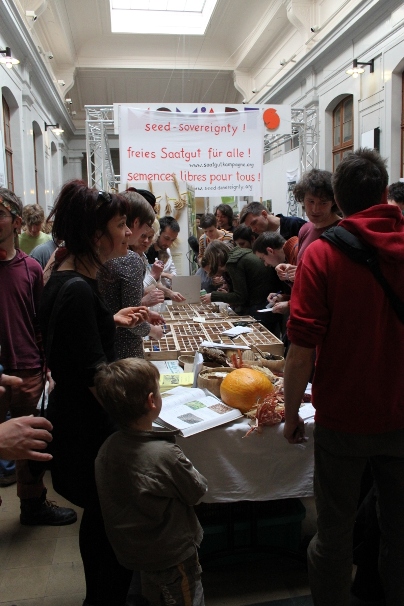
First European Seed Swap with participants from across Europe and beyond.
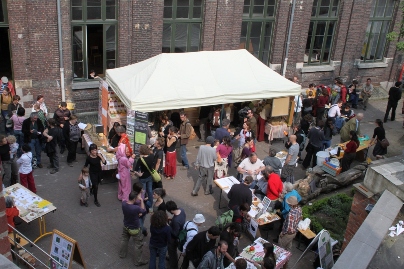
Sunday,
April 17th in Brussels organizations from ten European countries
offered heritage seeds for free or trade. Traditionally farmers
trade seeds, but this practice has largely been lost in Western
Europe, in favor of the industrial model of modern agriculture.
Hundreds of seed varieties were displayed on tables, with growers
and visitors deeply engaged in conversation. The seed swap took
place on the day peasant farmers organization La Via Campesina
designated as a worldwide day of action.
 “There
have been seed swaps in different European countries, but this is
the first one at the European level”, says the German,
Jürgen Holzapfel, co-organiser of the event and himself a
farmer involved in conserving traditional wheat varieties. “Seed
swaps are an important contribution to conserving agricultural
biodiversity.”
“There
have been seed swaps in different European countries, but this is
the first one at the European level”, says the German,
Jürgen Holzapfel, co-organiser of the event and himself a
farmer involved in conserving traditional wheat varieties. “Seed
swaps are an important contribution to conserving agricultural
biodiversity.”
“Seed is has always been the foundation of food sovereignty in Poland”, said Maciek Pilarski, coordinator of the International Coalition to Protect the Polish Countryside from Stryszow. “In Poland, there are 1.5 million small scale farmers, who could play an important role in conserving old varieties.”
“In the Turkish language the importance of seed is made evident in that only those who produce seed are called farmers. The others are called ‘guardians of the field’”, relates Abdullah Aysu, president of the Turkish Confederation of Farmers (Çiftçi Sen) which represents 40,000 small farmers. Çiftçi Sen is a member of Via Campesina and therefore participates in the Brussels seed swap.
The
seed swap took place as part of the seed action days, organized by
the international campaign “Sowing the Future, Harvesting
Diversity” (www.seed-sovereignty.org). As part of the action
days, a petition will be handed over to the European Parliament on
Monday. The petition, signed by more than 50 000 people in 20
countries, protests against planned reforms in EU legislation
which would make swapping and distributing seeds of traditional
varieties much more difficult.
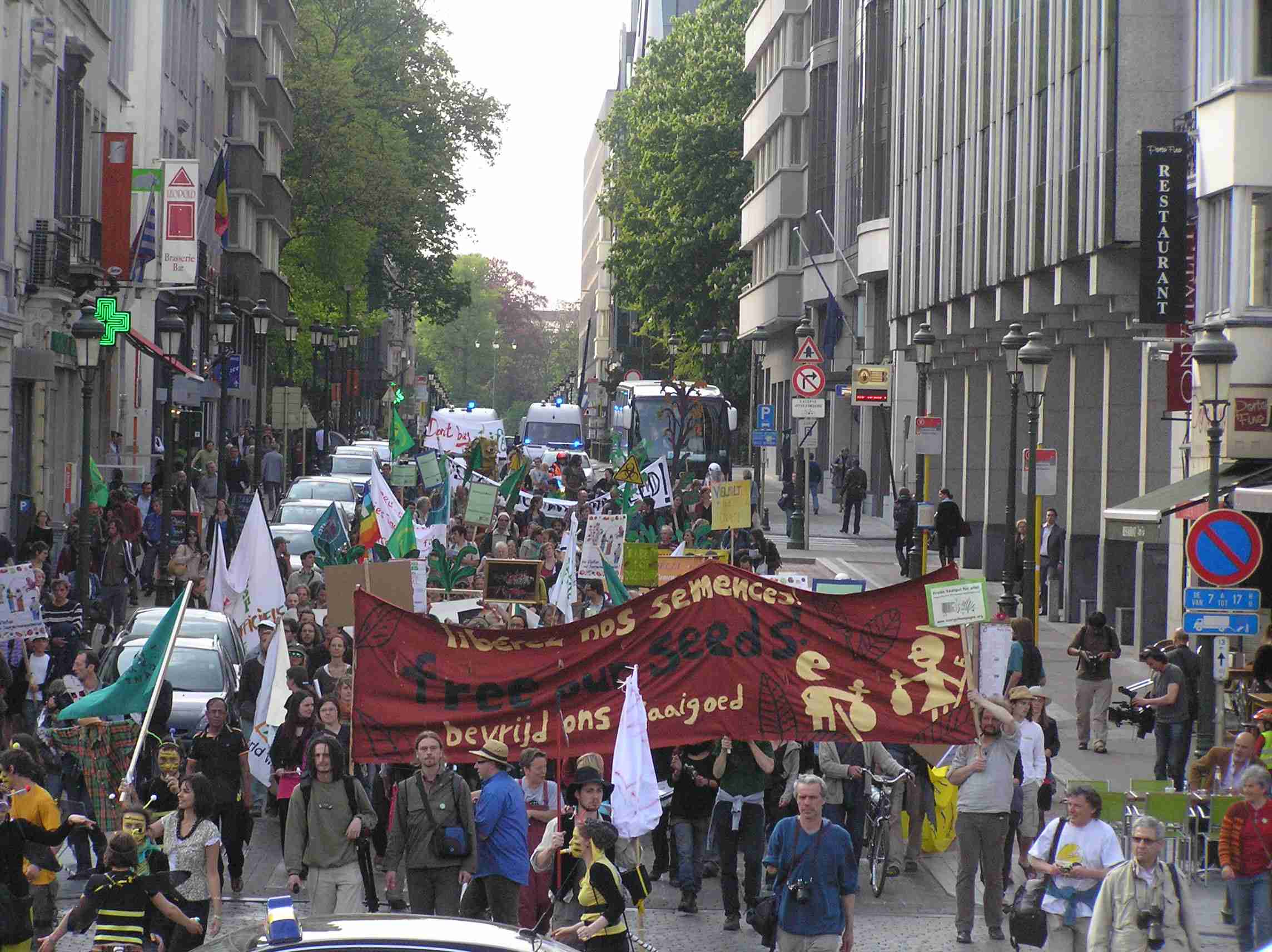
During a colorful and good natured march, dubbed the 'Anti Lobby Tour', more than 58,000 signatures were submitted to the EU parliament.
On Monday, April 18th, the second day of the international days of action for seed sovereignty, a large demonstration marched through the EU district of Brussels. On this Anti Lobby Tour, in front of the Bayer agrochemical and seed company building, a petition with more than 58,000 signatories was handed over to three Members of the European Parliament.
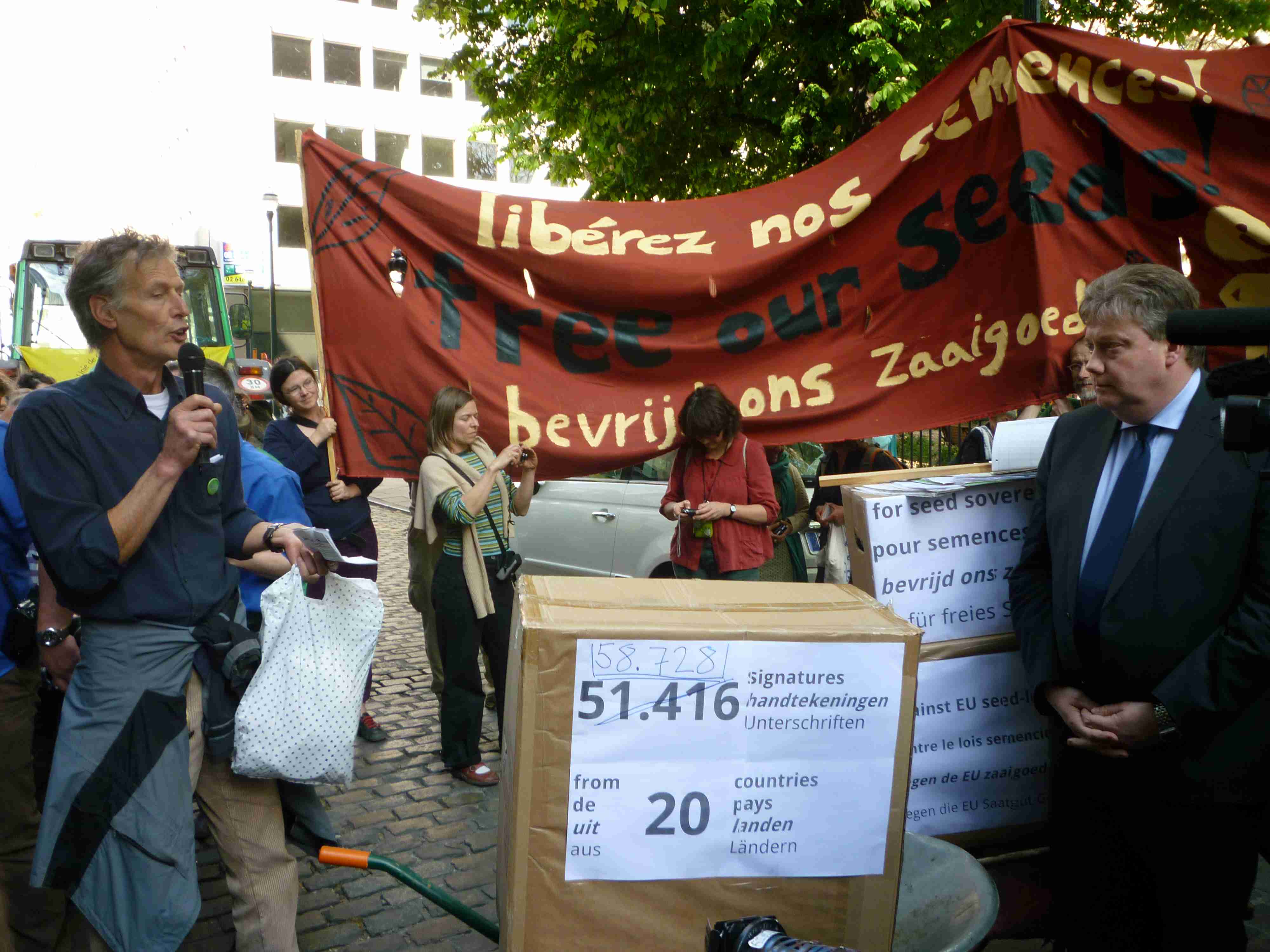 Jürgen
Holzapfel stressed the demands of the seed campaign: "We
insist on the right to resow seeds from our own harvest for
purpose of propagation and further distribution. Furthermore, we
wish to see support of locally adapted varieties by promotion of
conservation of heritage varieties and breeding improved varieties
for organic and bio-diverse agriculture. We demand a new method of
seed certification, which excludes GMO or chemical and energy
intensive varieties."
Jürgen
Holzapfel stressed the demands of the seed campaign: "We
insist on the right to resow seeds from our own harvest for
purpose of propagation and further distribution. Furthermore, we
wish to see support of locally adapted varieties by promotion of
conservation of heritage varieties and breeding improved varieties
for organic and bio-diverse agriculture. We demand a new method of
seed certification, which excludes GMO or chemical and energy
intensive varieties."
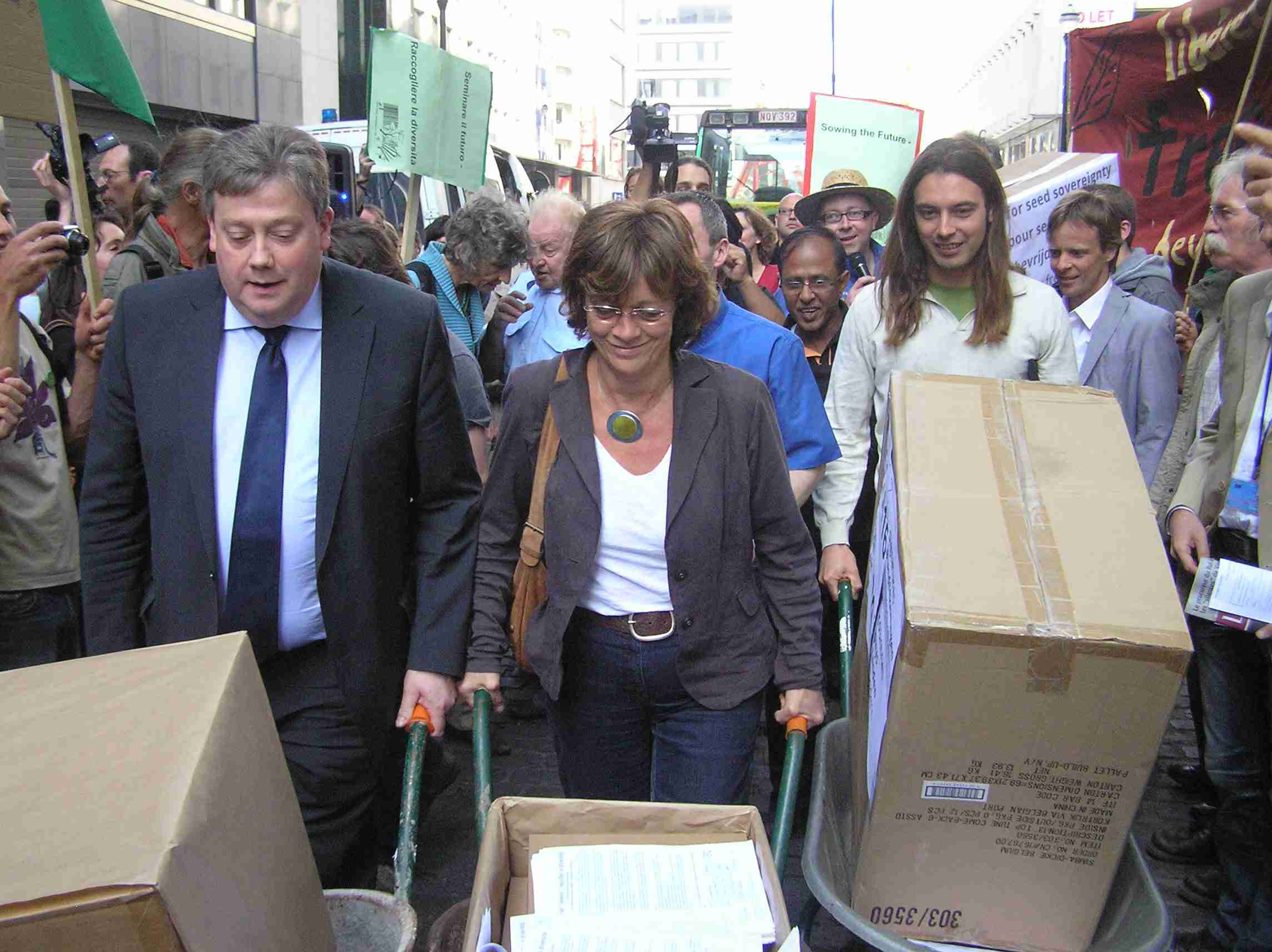 In
reply to the handover of the signatures, Vice President of the EU
Parliament and Belgian MEP Isabelle Durant referred to the
demonstrators as a vanguard that would continue to address
important issues. She demanded this happen at all levels both
within the EU and in member states. Together with their
parliamentary colleagues Marc Tarabella and Kriton Arsenis, she
took the signatures in three wheelbarrows to the European
Parliament building. During the handover, MEP Tarabella called for
a full inquiry into the consequences of proposed EU seed
legislation reform.
In
reply to the handover of the signatures, Vice President of the EU
Parliament and Belgian MEP Isabelle Durant referred to the
demonstrators as a vanguard that would continue to address
important issues. She demanded this happen at all levels both
within the EU and in member states. Together with their
parliamentary colleagues Marc Tarabella and Kriton Arsenis, she
took the signatures in three wheelbarrows to the European
Parliament building. During the handover, MEP Tarabella called for
a full inquiry into the consequences of proposed EU seed
legislation reform.
Other stops brought the Anti Lobby Tour to the European Seed Association (ESA) building, the lobbying organization for the European seed industry, and to the DG General Research of the European Commission. Both of whom promote the use of industrial and genetically modified seeds.
After entertaining plays and speeches from representatives of Turkey and India on the impact of the EU seed law on small farmers, the demonstration concluded at the Place du Luxembourg square.
"The action days were a great success!" said Anne Schweigler, one of the organizers, “I'm very optimistic about the future. The enthusiasm and interest of the many people in the seed-swap, and the critical mass here today of many dedicated people of different backgrounds has strengthened hope in all of us. Here we've shown concrete and workable alternatives to the process of privatizing all areas of life and the living."
WORLD CAFÉ on SEED SOVEREIGNTY
More than 40 members from 17 Organisations of 12 European countries took part in the World Café in Brussels on 18/04/2011
from
Austria/Germany:
Arche
Noah
from
Belgium:
Jardin
des collines
AEFJN
(Af.-Eu.-Net)
from
Danmark:
Danish
Seed Savers
from France/Suisse/Germany: Europ. Civic Forum
from
Germany:
BUKO-Campaign
against Biopiracy
JANUN
VEN
IG
Saatgut
from
Great Britain:
Seedy
Sunday
GM free Cymru
from
Greece:
Peliti
from
Ireland:
Irish
seed savers association
from
Luxembourg:
Radio
Ara
from
Poland:
ICPPC
from
the Netherlands:
ASEED
Bifurcated
Carrots
Supporter of the international days of action
from Belgium:
Nature
& Progrès
Le Début des Haricots
Rencontre
des Continents
MAP
Quinoa
Réseau des GASAP
Les
amis de la terre
Kokopelli
FIAN Belgium
Le Centre
liégeois du Beau Mur
La ferme du Hayon
Mouvement des
objecteurs de croissance
La Bande de Gasath
Collectif
123
SOS Faim
Associations 21
ADG
Oxfam
Solidarité
FUGEA
Terre & conscience
Collectif
Artivist
Reclaim The Fields
CITY MINE(D) –
BRXL
Grappe
magasins du monde OXFAM
Comité pour le
respect des droits humains "Daniel Gillard"
Maison
des Cultures et de la Cohésion
Sociale
Wervel
klorofil
okno
Les Jardins de
Pomones
Tuinbouwbedrijf Akelei
les Vers Tiges au Balcon
from Europe
Invitation to the action days in Brussels
La
Via Campesina, 16.3.2011:
BALI
SEED DECLARATION
Peasant
Seeds: Dignity, Culture and Life. Farmers in Resistance to Defend
their Right to Peasant Seeds
Let‘s meet in Brussels!
Program:
Tens of thousands of people throughout Europe are actively demanding that the right to produce seeds remains in the hands of small farmers and gardeners. A diversity of crops has nourished mankind for thousands of years. Seeds that we have inherited from past generations are the basis of life and are essential for food sovereignty.
The big seed trusts are determined to obtain worldwide control. This has been made clear by genetic engineering, patents on plants and animals, the introduction of seed reproduction fees… Add to that terminator technology that destroys the fertility of seeds and the prohibition of peasant varieties. We must prevent the very basis of our food supply from becoming a source of profit for multinational companies.
Two years ago we launched the petition „Sowing the future-harvesting diversity“ to protest against planned new European Union seed laws that are dominated by the interests of the big seed companies.
We intend to present the tens of thousands of signatures collected throughout Europe to the European Parliament and call for an enquiry to clarify whether these laws violate the fundamental right to food and to access to seeds.
We invite you to participate in two days of action during which we will make clear our opposition to EU policies and our intention to resist against them.
Come to Brussels! We are not prepared to accept that the basis of our livelihood is handed over to multinationals. In the future we intend to maintain and pass on the heritage of our plant varieties.
The main event will take place on 17 April, the day of international peasant resistance declared by Via Campesina, followed by a demon-stration on the 18th.
If you cannot come to Brussels, organise similar events in your countries, cities and villages!
Sunday,
17 April 2011
11.00 -18.00 „Maison des Cultures et de la cohésion sociale de Molenbeek-Saint-Jean”, Chaussée de Merchtem 67, 1080 Molenbeek-Saint-Jean
International
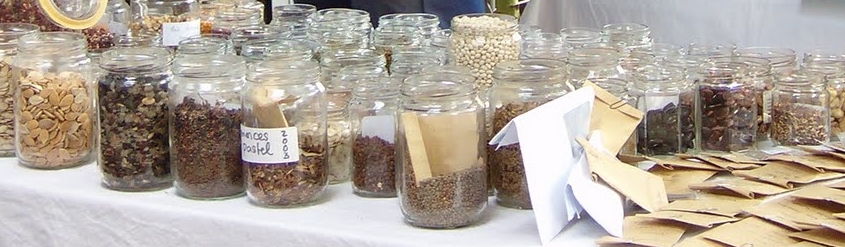
Seed Swap and
multilingual exhibition on seeds
Through this seed swap we want to draw public attention to a practice that has become increasingly widespread throughout Europe over the past few years and that could be made illegal by the planned EU laws.
16.00
-19.00 Molenbeek Cultural Centre
Conference
with presentations and debate
„Access to seeds is a
human right“
Activists from India, Turkey and several European countries will describe the situation concerning seeds in their countries and the consequences of the planned EU laws.
19.00
– 24.00 Molenbeek Cultural Centre
Music and films, dance and demo workshop
„popular kitchen” of the „collectif du 123”
Monday
18 April 2011
10.00 -13.00 „Mundo B”, Rue d'Edimbourg 26, 1050 Bruxelles
World-Café
Getting to know each other, exchange of experience and knowledge, discussions on collective work on seeds and the maintaining and multiplication of plant and crop diversity in gardens and fields.
15.00
-17.00 Demonstration
Demonstration to the Brussels offices of seed companies and their lobby organisations
Please contact us if you want to take part in these events and in the growing resistance against the monopolisation and privatisation of seeds !
Seedy Sunday 2010 in Brighton:
Photos by Dan Johnson Photography
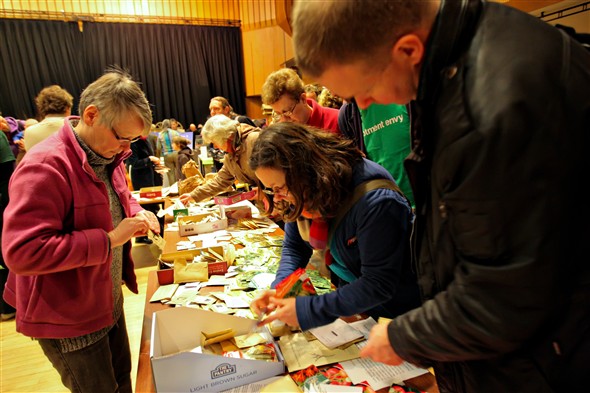
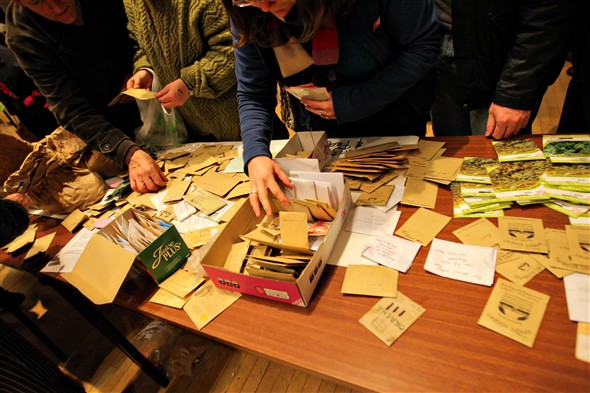
Grassroots Seed Activism in the UK, by Debbie Greenfield, Chair, Seedy Sunday Brighton
Invitation to a
seed swap and exchange of know-how
Brussels, Sunday 17 April 2011
Within the framework of two days of action, an international seed swap will be organised with the aim of circulating all kinds of hardy and reproducible seeds and exchanging information, experiences and know-how on the production of seeds.
This event will bring together many initiatives which already exist in various countries. It will give them an occasion to present their activities and to establish links between us. This has become all the more urgent in view of the fact that European and international laws and regulations, either already in force or in preparation, could very well hinder or even prohibit such seed swaps.
Our main objective is to encourage the practice by farmers, amateur and professional gardeners of exchanging and giving seeds. This ancient tradition could be adopted by all people who are aware of the loss of diversity of varieties and of the risk posed by the growing privatisation of life-forms. We are witnessing a serious erosion of theoretical and practical knowledge. We want to look at ways of drawing attention to this danger and of passing this know-how on to a wider public.
To achieve this, we must use all means at our disposal!
Bring whatever you can that you think is appropriate to this event : seeds, exhibitions, slide shows, brochures, documents, films… Proposals for workshops (production and extraction of seeds, awareness building on gardening and agriculture…) or exhibits (vegetables, fruit, seeds, cereals or other collections of biodiversity…) will be welcome. Help us to awaken all our senses!
During the morning of Monday 18 April there will be time for meetings and discussions between all those interested in getting to know each other better. We would like to imagine together how experience and know-how concerning seeds can be passed on. Do you have training or pedagogical tools or methods which could be shared by others? In your opinion what would it be important to develop and in what form? Would you be ready to participate in the elaboration of such tools? Do you want to suggest other subjects for discussion on Monday morning?
Practical aspects
For the seed swap, send us an exact list of what you need: space, tables, electricity, exhibition panels… If you cannot take part, you could send seeds that you are ready to share with us. The more seeds there are, the more diversity will be distributed. We ask you only to bring naturally produced reproducible varieties (no F1 or F2, GMOs, GMPs) with no risk of unintentional crossbreeds between varieties.
We will send you a more detailed program once it is available.
By
nature seeds are nomadic,
let us help them to travel!
Longo Maï Seed-exhibition and excange in Païs Alp 2009, Provençe:
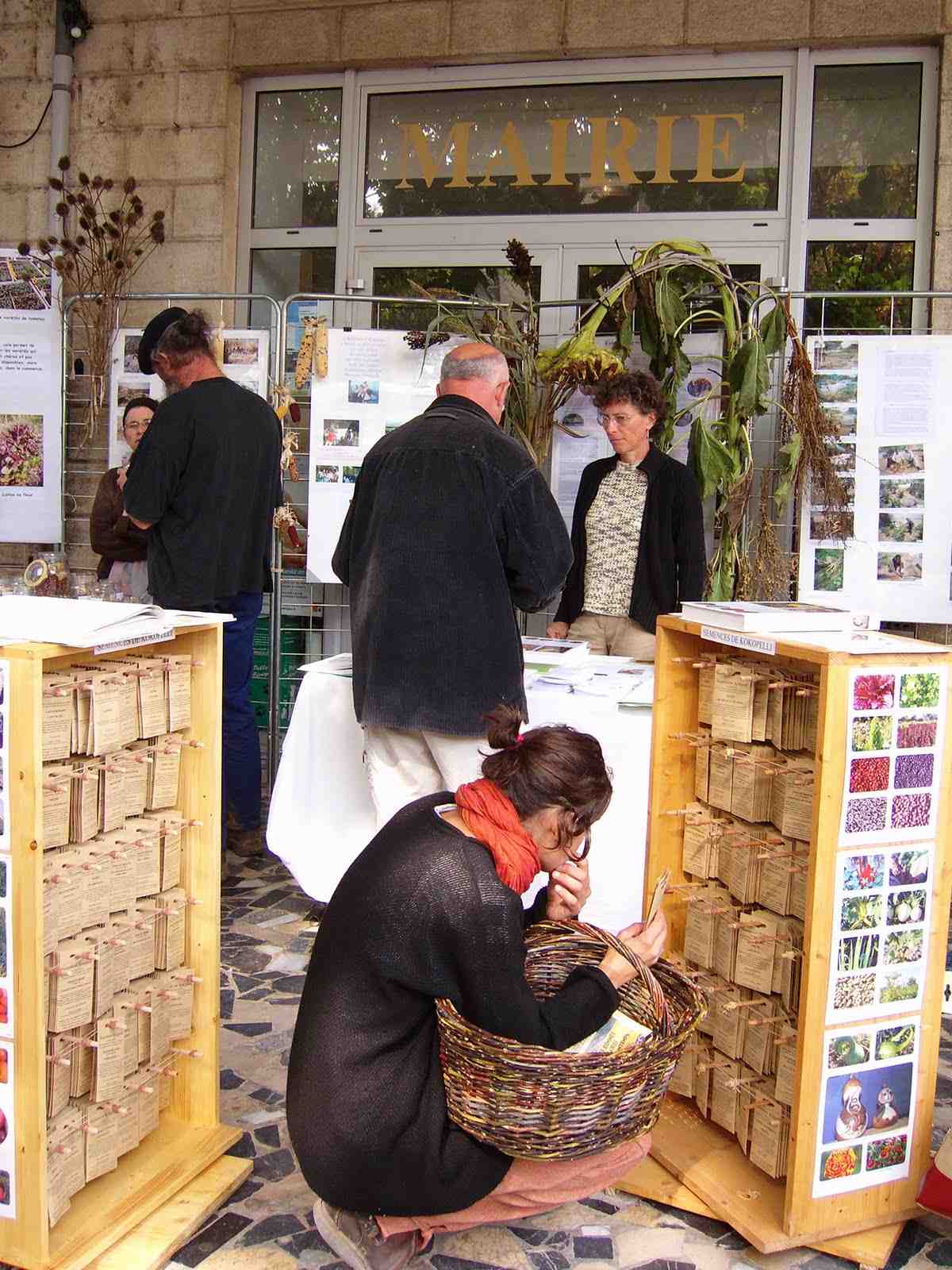
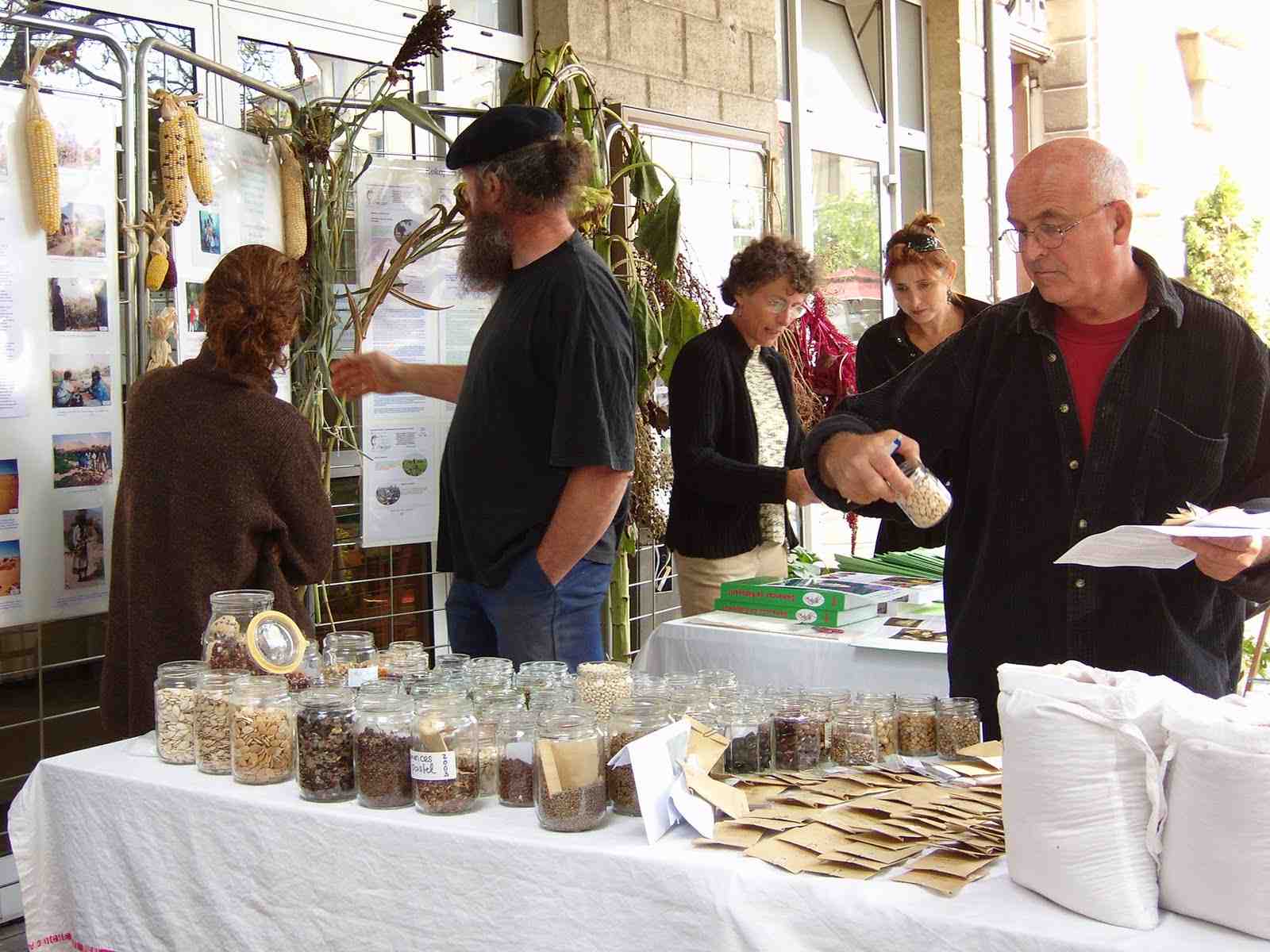
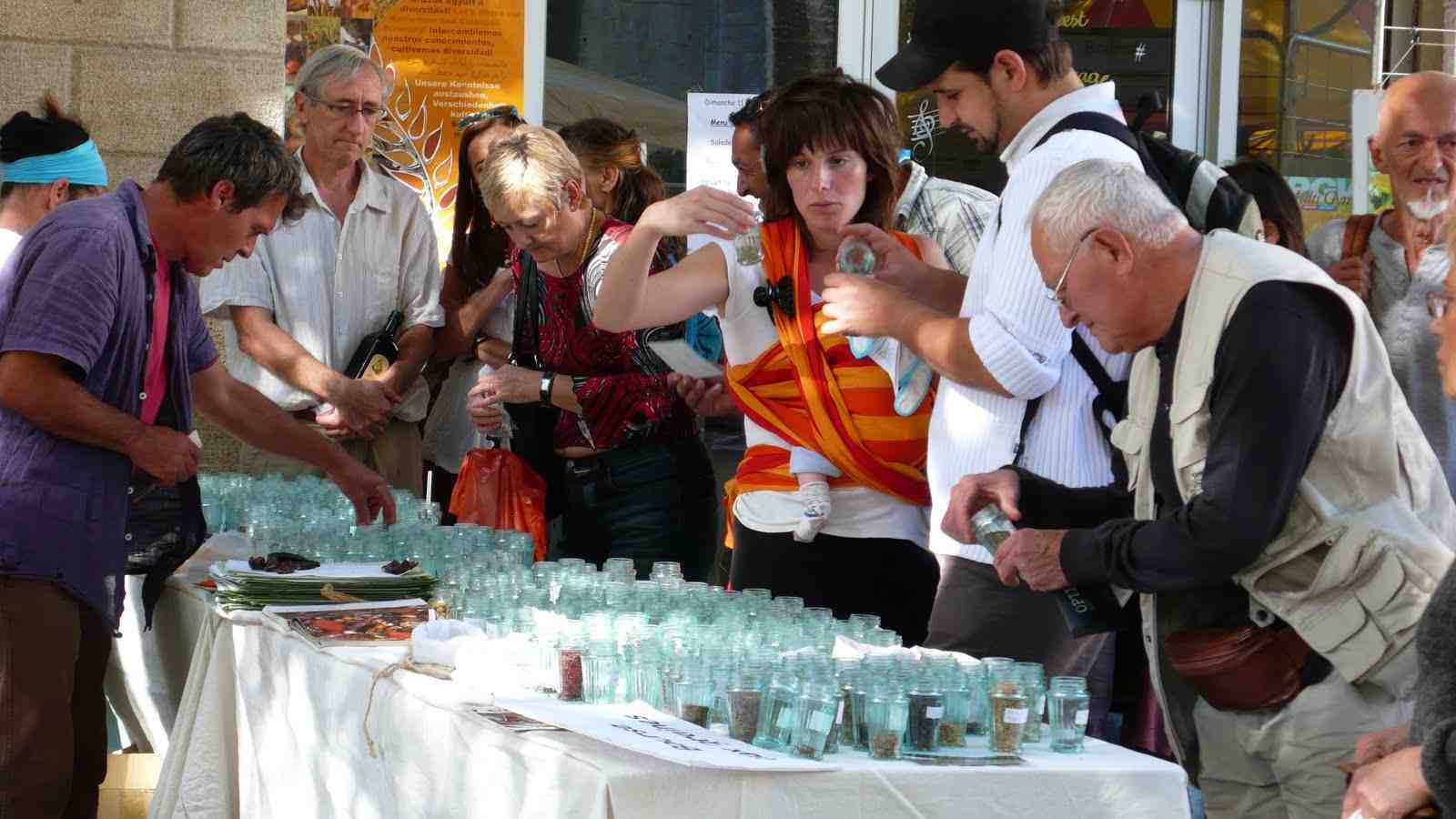
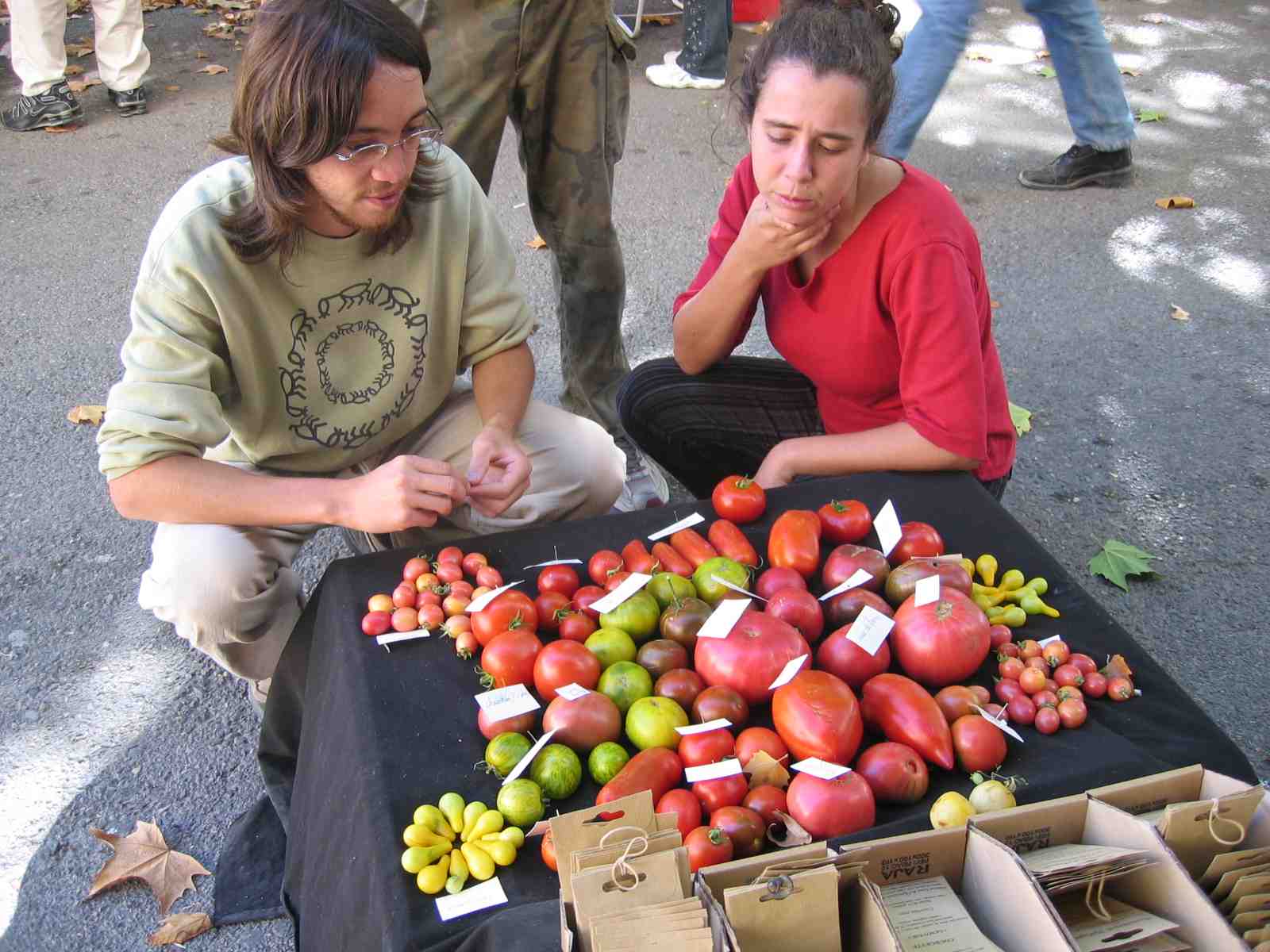
Participants (11-04-2011):
Les jardins de Pomones (Belgium)
Deccan Development Socity (India) – cancelld :(
Irish Seed Savers Association
Kokopelli (Belgium and France)
Gartenbaubetrieb „Akelei“ (Belgium)
„De Godin“ Essbare Landschaften (Netherlands)
Bifurcated Carrots (Netherlands)
Longo Mai (France and Germany)
Scandinavian Seedsavers
Heritage Seed Library (England)
Peliti (Greece)
Schloss Freudenberg (Germany)
Tom Wagner (USA) – table display only!
De Velt (Belgium)
International Coalition for the Protection of the Polish Countryside (ICPPC)
Naturalni (Poland)
„Poland free of GMO”
Keyserlingk Institut (Germany)
Kaiserstühler Gärten (eventuell) (Germany)
From March 25. to 27, 2010, 160 representatives of the European seed networks gathered in Graz, Austira, for the 5th European Seed Meeting “Let’s Liberate Diversity!”. They included groups that work on the conservation, use and distribution of plant diversity, civil society organizations, gardeners, breeders, and men and woman farmers from over 20 countries. (...)
Graz Declaration: Freedom for Diversity
(...)
We demand:
the right to obtain seeds from our own harvest, to re-sow, distribute and sell them;
the promotion of diversity in all regions by supporting conservers and breeders of varieties that can be re-sown;
the prohibition of genetic modofication technologies in agriculture;
the prohibition, without exceptions, of patents on plants and animals, their traits and genes, as well as patents on breeding methods;
a new agrarian policy, which, instead of supporting energy-intensive industrial production and monocultures, promotes biodiverse and ecological production.
These demands are directed toward Member States and the European Institutions.
The participants of the 5th European Meeting in Graz, March 2010.
Crop diversity is the result of human actions all over the world that created it. It is a common good and it belongs to everyone. Access to diversity is fundamental for our daily bread and for achieving food sovereignty. In many regions of the world men and women farmers still continue to produce, exchange, and sell their own seeds.
Seed laws in Europe are to be changed in 2011. The seed industry wants to extends its intellectual property rights and the patenting of crop varieties. It lobbies for stronger control and even the prohibition of farmers' non-registered varieties.
10 companies, among them Bayer, Monsanto, Syngenta and Limagrain, already control 67% of the world seed market. They no longer want to miss out on the rest of the market when they could impose their registered varieties - which usually only thrive with the help of chemical fertilizers, pesticides and irrigation - upon the rest of the world. However, it is not these genetically homogenous industrial seed varieties which will be able to feed the world in the future, but the diverse, regional varieties which are able to adapt to climate change.
The negotiations for the new European seed law are taking place behind closed doors, among representatives of the seed industry and EU bureaucrats. This does not lead us to expect a positive outcome. In order to influence the new seed laws we want to raise public awareness for our goals.
We demand:
the right to produce our seeds from our own harvests, to re-sow and to give them to others;
to encourage regional crop variety by supporting the men and women who keep and breed organic varieties;
to forbid genetic technologies in agriculture;
to exclude patents on plants;
to forbid GMOs and varieties that require intensive chemical use;
to end high energy inputs in agriculture which are the result of monocultures, long transport routes as well as industrial crops that require chemical fertilizers and pesticides.